Diabetes Technology Offers Better Outcomes
The complications we worry about with diabetes – kidney disease, vision loss, nerve damage, heart disease – don’t come from one bad day. They come from years of numbers running high without anyone seeing it. That’s what this technology changes. When you can see the trend and act on it, you’re not just managing diabetes, you’re protecting the next twenty years.
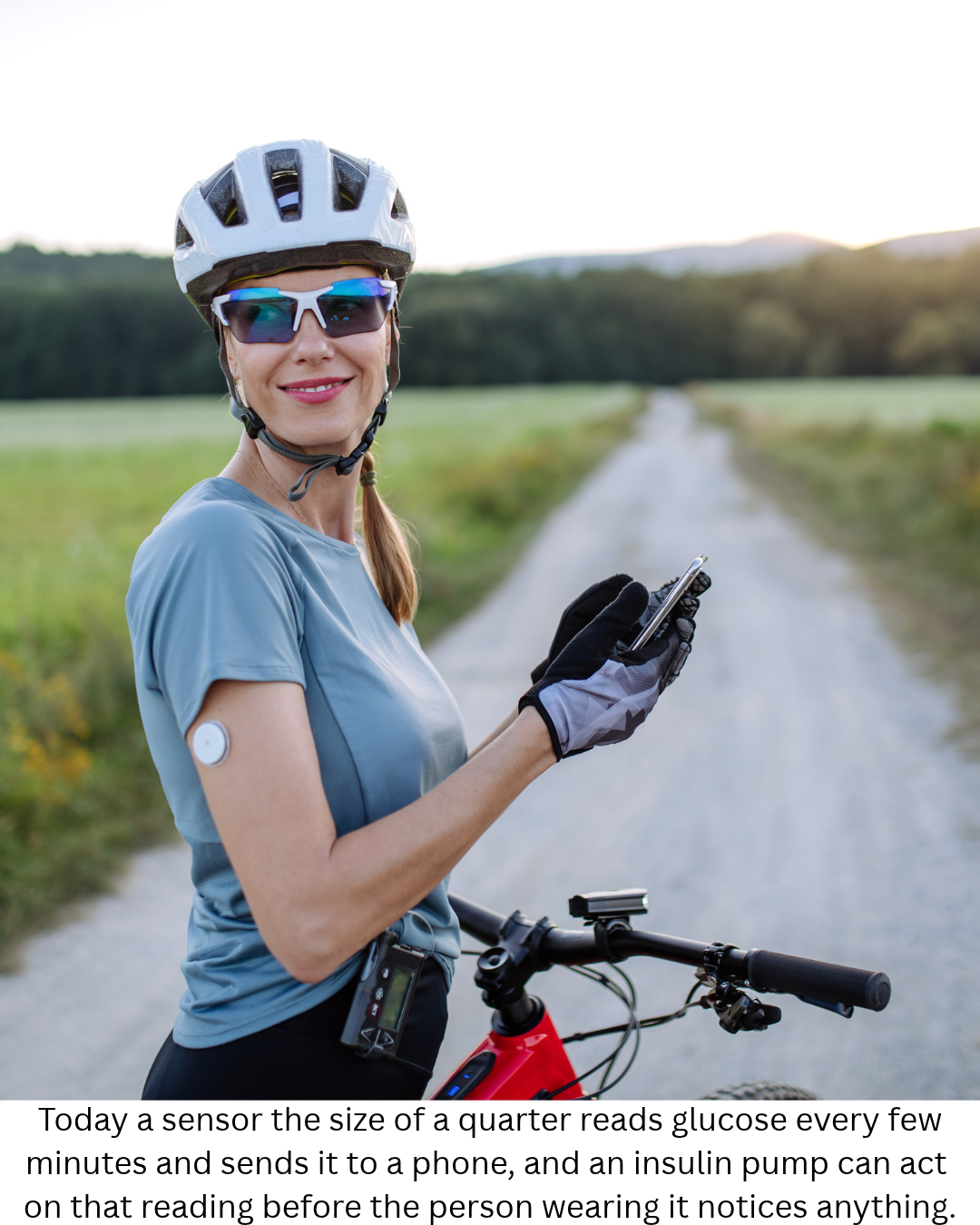
A generation ago, managing diabetes meant a finger prick, a logbook and some guesswork. Today a sensor the size of a quarter reads glucose every few minutes and sends it to a phone, and an insulin pump can act on that reading before the person wearing it notices anything.
That shift matters, especially in Northwest Iowa, where diabetes affects roughly 9% of adults; about a third have prediabetes. The technology that has changed diabetes care most in the past decade is not expensive or hard to reach. It is prescribed and managed in everyday clinic visits at Floyd Valley Healthcare.
The clearest gains come from continuous glucose monitoring (CGM). A CGM is a small sensor worn on the arm or abdomen that measures glucose continuously and sends readings to your phone. Instead of three or four readings a day, it captures the full picture: overnight lows, post-meal spikes, the effect of a medication change. Research consistently links CGM use to lower A1C, more time in a healthy blood sugar range and fewer trips to the emergency department, across type 1 and type 2 diabetes alike. Alerts are a large part of that. A CGM warns when glucose is trending high or low before symptoms appear, which matters most for people with hypoglycemia unawareness and for older adults, who face the highest risk of a severe low.
“A number on a meter tells you where you are. A CGM tells you where you are headed,” says provider. “That’s a completely different conversation to have with a patient, and it helps a lot when we’re talking about effectively managing their diabetes, “ says Allison Larson, LMSW, LPN and member of Floyd Valley Healthcare’s Diabetes Services team.
Automated insulin delivery (AID) goes even further. An AID system pairs a CGM with an insulin pump and adjusts background insulin every few minutes, increasing it when levels climb and suspending it when glucose falls. The American Diabetes Association named AID the preferred insulin delivery method for people with type 1 diabetes and type 2 diabetics on multiple daily injections. In one clinical trial, participants using an automated system spent 65% of the day in target glucose range, compared with 43% for those using injections and a CGM. “The convenience is real, but the bigger story is who benefits,” says provider. “Diabetes requires dozens of small decisions a day, and for people juggling work schedules, families or even several chronic conditions, their glucose levels are the last thing on their mind. Tech does the remembering.”
For patients who prefer injections, Bluetooth-enabled smart pens log every dose and flag the ones that get missed. And in March, the FDA approved Awiqli, a once-weekly basal insulin for adults with type 2 diabetes, trading 365 injections a year for 52. “The patients who benefit most are often the ones who have struggled the longest,” says provider. “When tech is doing some of the adjusting, a hard week doesn’t have to turn into a trip to the ER or urgent care,” says Kelly Wiese, RD, LD, CDCES Dietician and member of Floyd Valley Healthcare’s Diabetes Services team.
None of it works without someone reading the data. That part is simple at Floyd Valley Healthcare. A patient’s sensor uploads automatically, a primary care provider reviews the trends and their care team works alongside that provider on nutrition, medications, device training and troubleshooting.
More is on the way. MiniMed’s Flex pump is about half the size of its predecessor and runs from a smartphone; tubeless patch pumps are in development. In August, Abbott received FDA authorization for Libre Duo 10 Day, the first wearable to track glucose and ketones together and flag diabetic ketoacidosis before it becomes an emergency. And Dexcom’s next-generation G8 sensor, half the size of the current model, is projected for late 2027 or early 2028.
The complications we worry about with diabetes – kidney disease, vision loss, nerve damage, heart disease – don’t come from one bad day. They come from years of numbers running high without anyone seeing it. That’s what this technology changes. When you can see the trend and act on it, you’re not just managing diabetes, you’re protecting the next twenty years.
For anyone managing diabetes the same way for years, it is worth asking what has changed. To learn more about diabetes education at Floyd Valley Healthcare, call (712) 546-3475 or visit FloydValley.org.

Stay Connected
Subscribe to our newsletter for healthcare updates, events, and community news from Floyd Valley.
